University of California San Francisco

Program in Craniofacial Biology
The UCSF Program in Craniofacial Biology (PCB), led by Licia Selleri, MD, PhD, unites internationally recognized faculty, research labs, and investigators studying the cellular, molecular, regulatory, and evolutionary mechanisms that shape the craniofacial complex and related tissues such as cartilage, bone, and muscle. Research also focuses on stem cell biology, including the neural crest, and how these progenitors differentiate into different cell types and tissues that form the head, neck, and musculoskeletal system.
A central emphasis is placed on understanding craniofacial anomalies and musculoskeletal diseases, which together account for nearly one-third of all human congenital disorders. This work has profound implications for patients and families who face long-term, complex surgical treatments.
PCB labs and collaborations
Most PCB laboratories are based at UCSF’s Parnassus Campus, with additional groups located at Mission Bay. Together, they form one of the nation’s strongest research communities dedicated to craniofacial development and birth craniofacial anomalies.
The program partners closely with the UCSF Musculoskeletal Center and collaborates with leading Bay Area institutions, including Stanford University and the Lawrence Berkeley National Laboratory (LBNL). These partnerships strengthen the scientific community focused on craniofacial biology and accelerate advances in understanding development and disease.
UCSF Craniofacial Center
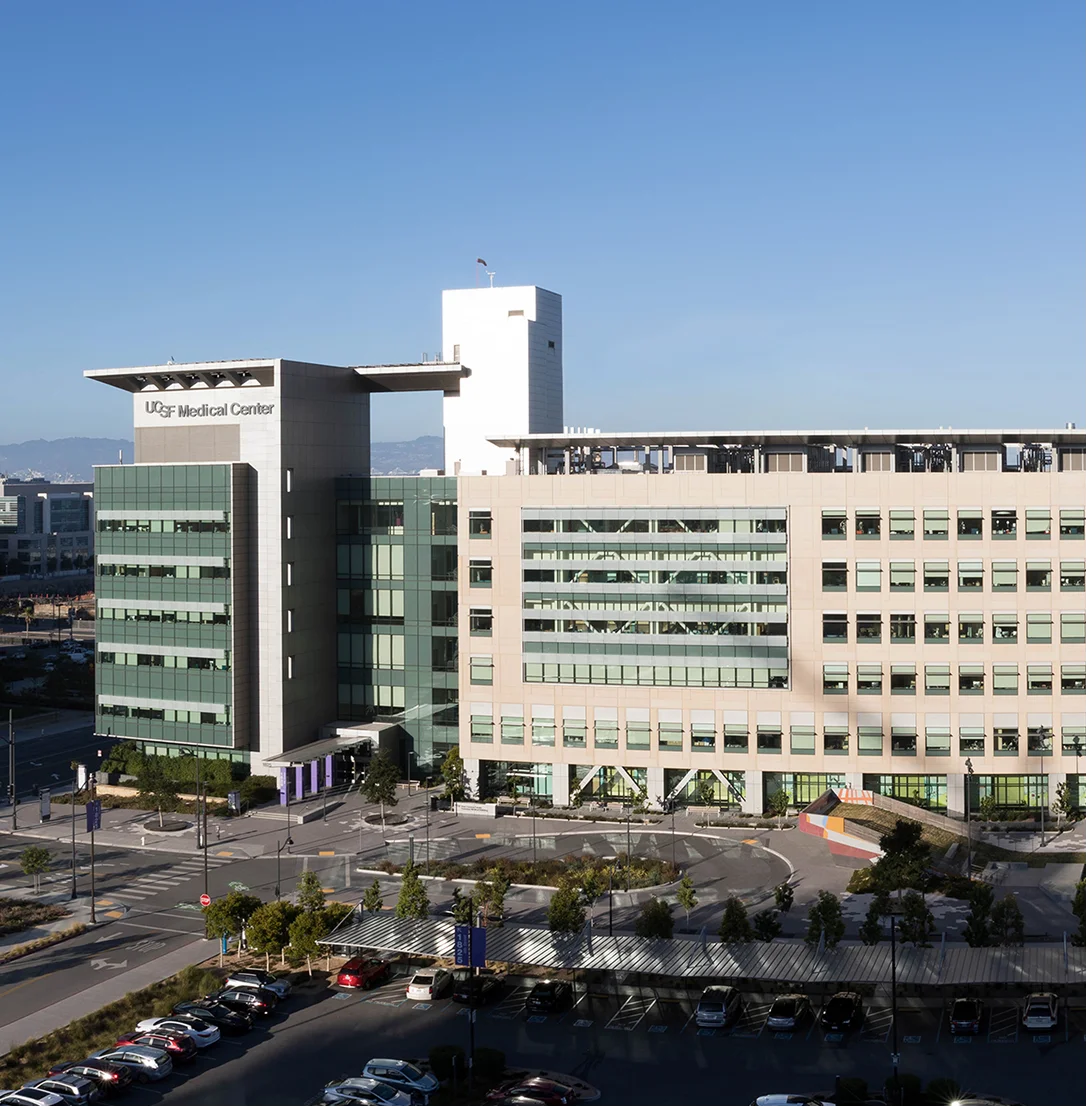
The UCSF Craniofacial Center treats all types of conditions affecting the face, head and neck, whether present at birth or acquired from trauma or tumor. The most common conditions include cleft lip with or without cleft palate, which result from lack of fusion of the facial prominences and/or palatal shelves, and craniosynostosis syndromes, which involve the early fusing of one or more of the bones in the skull and face during fetal development.

The Craniofacial Seminar Series
The Craniofacial Seminar Series, now in its 16th year, is a monthly event that draws a broad audience from basic and clinical science departments at UCSF. The series represents the basic and translational research themes of the PCB, including talks on developmental biology, fundamentals of biomedical sciences, tissue engineering, and regeneration.
Visiting and local leaders in craniofacial research and developmental biology present their distinguished research and new work. Notable past presenters include Olivier Pourquie, Denis Duboule, Francois Spitz, Liz Lacy, Lee Niswander, Igor Adameyko, Rolf Zeller, and James Briscoe. Speakers also spend the day meeting in person with faculty and students from the UCSF Parnassus, Mission Bay, and San Francisco General Hospital campuses.
2025–2026 PCB Seminar schedule
Research-in-Progress Seminars (RIPS)
The Research-in-Progress Seminars (RIPS), held twice a month, provide the opportunity for graduate students, postdoctoral fellows, and faculty to present their results informally.
Speakers present their ongoing work, with the last 15 minutes dedicated to audience questions and feedback from principal investigators of the PCB steering committee. This feedback offers invaluable insight and direction for the development of research, as presenters receive key input from mentors outside of their own. The experience also offers a rewarding training experience for speakers to gain exposure and practice in public speaking. Following the presentation, trainees and principal investigators join for a post-event luncheon.
This event welcomes trainees from various research groups to build connections, exchange experiments and protocols, explore new avenues for research, and foster meaningful relationships with peers and mentors.
Meet our faculty
Our PCB faculty are internationally recognized for their leadership in developmental biology, stem cell research, musculoskeletal biology, and translational approaches to craniofacial anomalies.