University of California San Francisco

Oral Medicine Postgraduate Program
The UCSF Oral Medicine residency is a 36-month, CODA-accredited program leading to a certificate in oral medicine, with the option to pursue an MS in oral and craniofacial sciences. Residents train across clinics, hospitals, and research environments to become leaders in managing complex oral diseases and advancing the specialty through scholarship.
Why choose UCSF Oral Medicine?
The Oral Medicine residency offers a rigorous academic and clinical experience. Participants benefit from:
- Advanced clinical training in the Sol Silverman Oral Medicine Clinic, one of the nation’s busiest referral centers, as well as its satellite clinics, including the Sjögren’s Clinic, Oral Oncology Clinic, and Oral Dysplasia Program
- While the program is centered on oral medicine, residents also gain additional training in orofacial pain
- Multidisciplinary training across oncology, HIV care, transplant services, rheumatology, dermatology, and internal medicine
- Opportunity to co-enroll in the MS in oral and craniofacial sciences
- Access to UCSF’s world-class research environment and mentorship for a master’s-level project
- Preparation for academic, research, and clinical career pathways
- Mentorship from nationally and internationally recognized experts in oral medicine, orofacial pain, and oral pathology

Program structure and learning experience
The Oral Medicine residency is a full-time, 36-month program beginning each July and accredited by CODA. The curriculum combines didactic training, clinical experience, and research opportunities. Residents gain expertise in diagnosing and managing oral diseases, orofacial pain, treating medically complex patients, and conducting clinical or basic science research.
Graduates earn a certificate in oral medicine and may optionally pursue an MS in oral and craniofacial sciences. The program prepares residents for careers in academia, clinical practice, and research, with eligibility for American Board of Oral Medicine certification.
Stipend (subject to change):
- PGY 1: $71,760/year
- PGY 2: $74,128/year
- PGY 3: $76,574/year
Curriculum
Curriculum design
Residents receive a balanced mix of didactic instruction, hands-on clinical training, and guided research experiences.
-
- Core courses required by the American Board of Oral Medicine and UCSF Graduate Division during the first year.
- Additional courses required by the Oral Medicine program include Introduction to Oral Medicine, Immunology, and Infectious Diseases.
- Tailored curriculum in biostatistics, clinical research, oral biology, oral pathology, behavioral sciences, and medical ethics
- Course in physical diagnosis, preparing residents for internal medicine and specialty rotations
- Weekly seminars, journal club, Clinicopathological Conference, and patient management conferences
- Participation in the Head and Neck Tumor Board and attendance at UCSF School of Medicine grand rounds
-
- Primary training in the Sol Silverman Oral Medicine Clinic, a major referral center with 5,000+ patient visits annually, and its satellite clinics, including the Sjögren’s Clinic, Oral Oncology Clinic, and Oral Dysplasia Program
- Management of complex cases including transplant recipients, oncology patients, oral mucosal disease, salivary gland disorders, orofacial pain, and oral cancer
- Rotations include internal medicine, oral pathology, diabetes, medical oncology, radiation oncology, dental oncology, head and neck oncology, infectious disease/HIV, transplant medicine, hepatology, pain medicine, sleep medicine, rheumatology, and dermatology
- Progressive responsibility as residents advance through the program
-
- Early identification of a research focus with dedicated faculty mentorship
- Coursework in clinical research design, biostatistics, and bioethics
- Opportunities for interdisciplinary projects across UCSF
- Completion of a master’s-level research project with expected presentation and publication
Admissions
How to apply
Applicants are accepted through the ADEA PASS system and must also submit the UCSF application processing fee. Admission decisions are based on academic performance, letters of recommendation, statement of purpose, TOEFL scores (if applicable), and interviews.
-
To be eligible for admission, applicants must:
- Be a U.S. citizen or permanent resident. International candidates are also welcome to apply.
- Hold a DDS, DMD, or equivalent degree by the program start date
- Take the TOEFL if English is not your native language and you have not completed at least one year of higher education in the U.S. or Canada (English-speaking institution)
- Minimum accepted TOEFL iBT score: 95 (scores must be within two years of application cycle opening; MyBest Scores not accepted)
- Submit a statement of purpose that describes your interest in both oral medicine and oral and craniofacial sciences through your ADEA PASS application
-
Submit your application through ADEA PASS (program code OM83) by the deadline, including: personal essay, CV, official dental school transcript, all undergraduate transcripts, two letters of recommendation, dean’s institution evaluation, and TOEFL scores (if applicable).
Pay the UCSF nonrefundable application fee through the UCSF application fee portal:
- $60 for domestic applicants
- $80 for international applicants
If you have international coursework: submit a course-by-course evaluation of all transcripts by ECE or WES and upload an unofficial copy of the international transcript(s) to ADEA PASS.
-
Interviews are typically held in November/December.
Advanced Training
Mini-Fellowship in Oral Oncology
The UCSF Mini-Fellowship in Oral Oncology is a six-month, full-time program for dentists (DDS, DMD, or equivalent) who want advanced training in the diagnosis and management of oral complications from cancer therapy. Fellows train across UCSF’s School of Dentistry, Helen Diller Family Comprehensive Cancer Center, and affiliated hospitals, with a curriculum that blends clinical care, teaching, research, and outreach.
-
Fellows gain expertise in oral oncology, oral dysplasia, and dental oncology through clinics at UCSF Parnassus and Mission Bay. Rotations include hematology, radiation oncology, medical oncology, pediatric bone marrow transplantation, and head and neck oncology.
-
Fellows attend a wide variety of courses, lectures, seminars and rounds. These include an orientation lecture series, weekly Head and Neck Oncology Tumor Board and Stem Cell Transplantation Grand Rounds, and bi-weekly oral medicine and oral oncology clinical pathological conferences. Fellows have the opportunity to teach UCSF dental students, oral medicine residents, and others in the clinic and formal didactic lectures.
-
Fellows receive protected research time and are encouraged to explore collaborative opportunities across the UCSF campus.
-
Fellows will work with community health centers, hospitals, and cancer treatment centers as well as dental organizations to provide community-based oral health outreach programs to serve the needs of the Bay Area community.
-
Performance is monitored carefully during the Mini-Fellowship in Oral Oncology. Fellows receive in-person feedback on a regular basis and are formally evaluated by supervising attendings and the program director. The fellows also have the opportunity to evaluate the faculty and rotations.
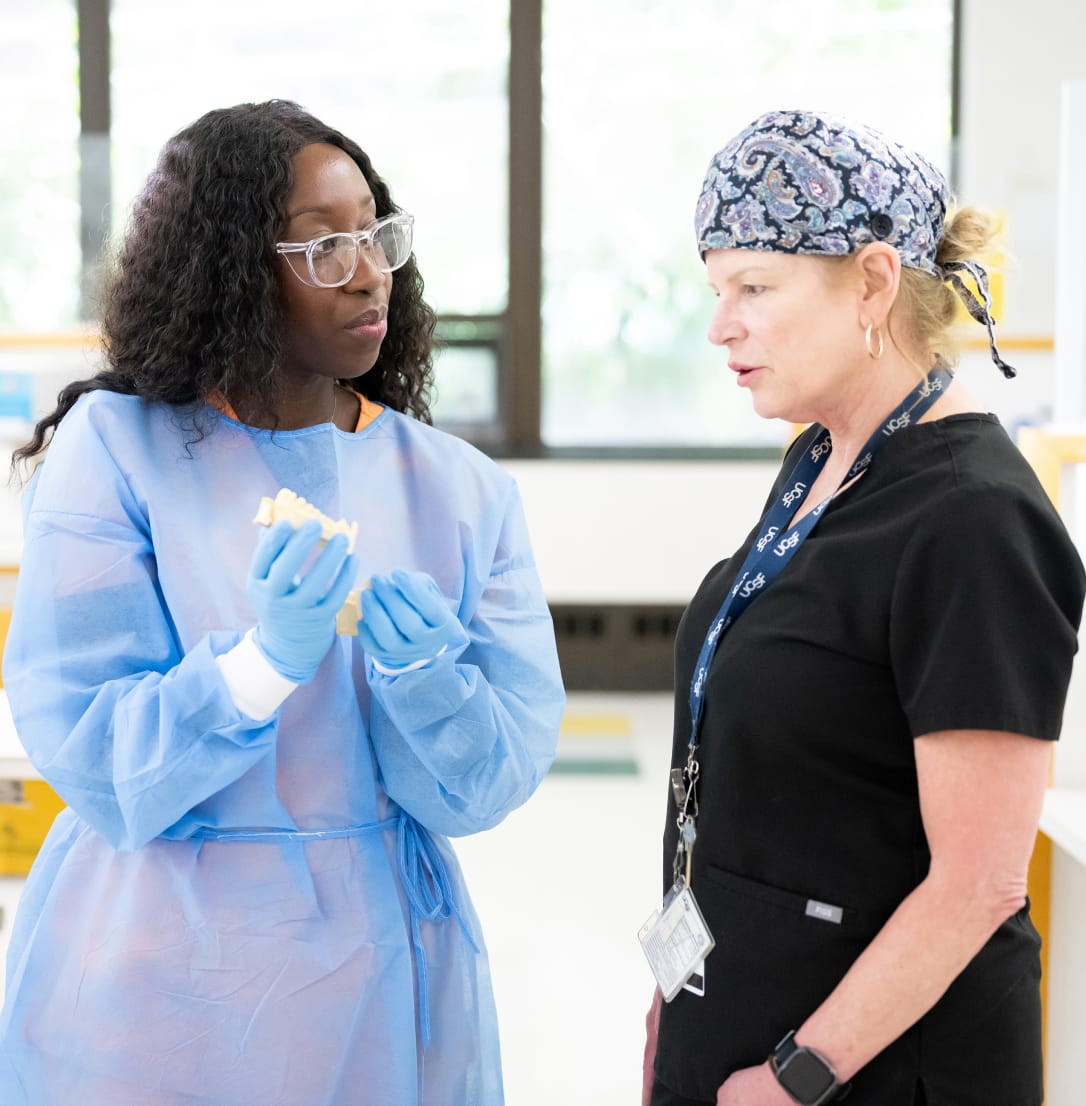
Faculty mentorship that shapes clinical and academic growth
Our Oral Medicine and Oral Pathology faculty are nationally and internationally recognized leaders who bring expertise in clinical care, research, and education to support resident training.

Join a community of emerging leaders
Residents in the UCSF Oral Medicine program gain advanced clinical training, rich research experience, and mentorship from faculty who are shaping the future of the specialty.